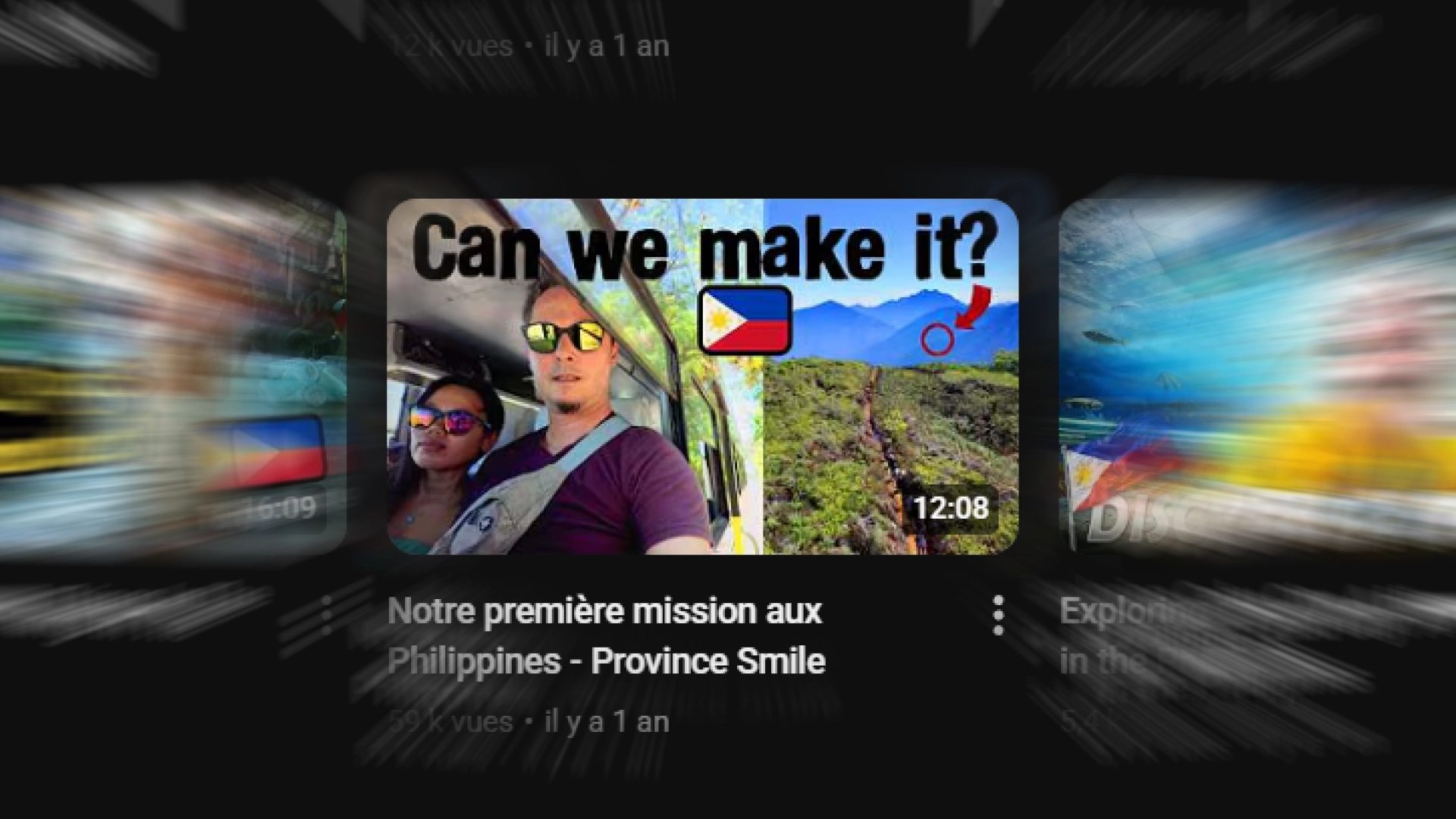
He had no room for error. Because every view could potentially decide whether he would run more missions to benefit underprivileged children or whether he should simply call it quits.
Jason, already a client for a first video on YouTube, tells me he wants to make a documentary with the goal of raising money for underprivileged children in the Philippines. He put part of his last savings into producing the documentary and into buying school supplies for children who don't really have access to this "luxury".
I've always been drawn to documentaries that have a positive impact on the world, so I immediately accepted the mission.
Preparing his documentary
Having worked in the film industry, Jason already knows quite a bit. We just had to establish what the documentary's objectives were and the angle we were going to take.
Filming the documentary
I wasn't there during the shoot, so I think it's best to let Jason explain how it went:
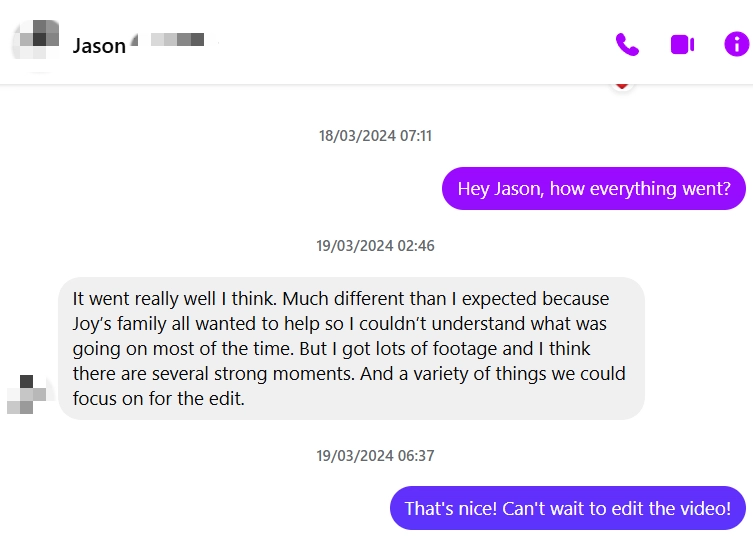
Translation:
Hey Jason, how did it go?
I think it went really well. It was very different from what I expected, because Joy's whole family wanted to help, so I didn't understand what was going on most of the time. But I filmed a lot and I think there are several strong moments. And we have plenty of things to focus on for the edit.
That's great! I can't wait to edit the video
Editing the documentary
Because everything couldn't go that smoothly, it was during the editing of the documentary that things became problematic.
A structure problem
The first obstacle we run into is the very structure of the events. During his trip, Jason and Joy first go and buy school supplies. They then prepare them with Joy's family to go distribute them at a school in the mountains. This school is only accessible on foot via a walk of about seven kilometers, through the bush and with a fairly steep elevation gain. Then they head to another school, one that's easily accessible.
Reading that last paragraph, you may have already grasped the issue, but let me explain why it's a major problem on YouTube.
If we simplify a story as much as possible, it comes down to this:
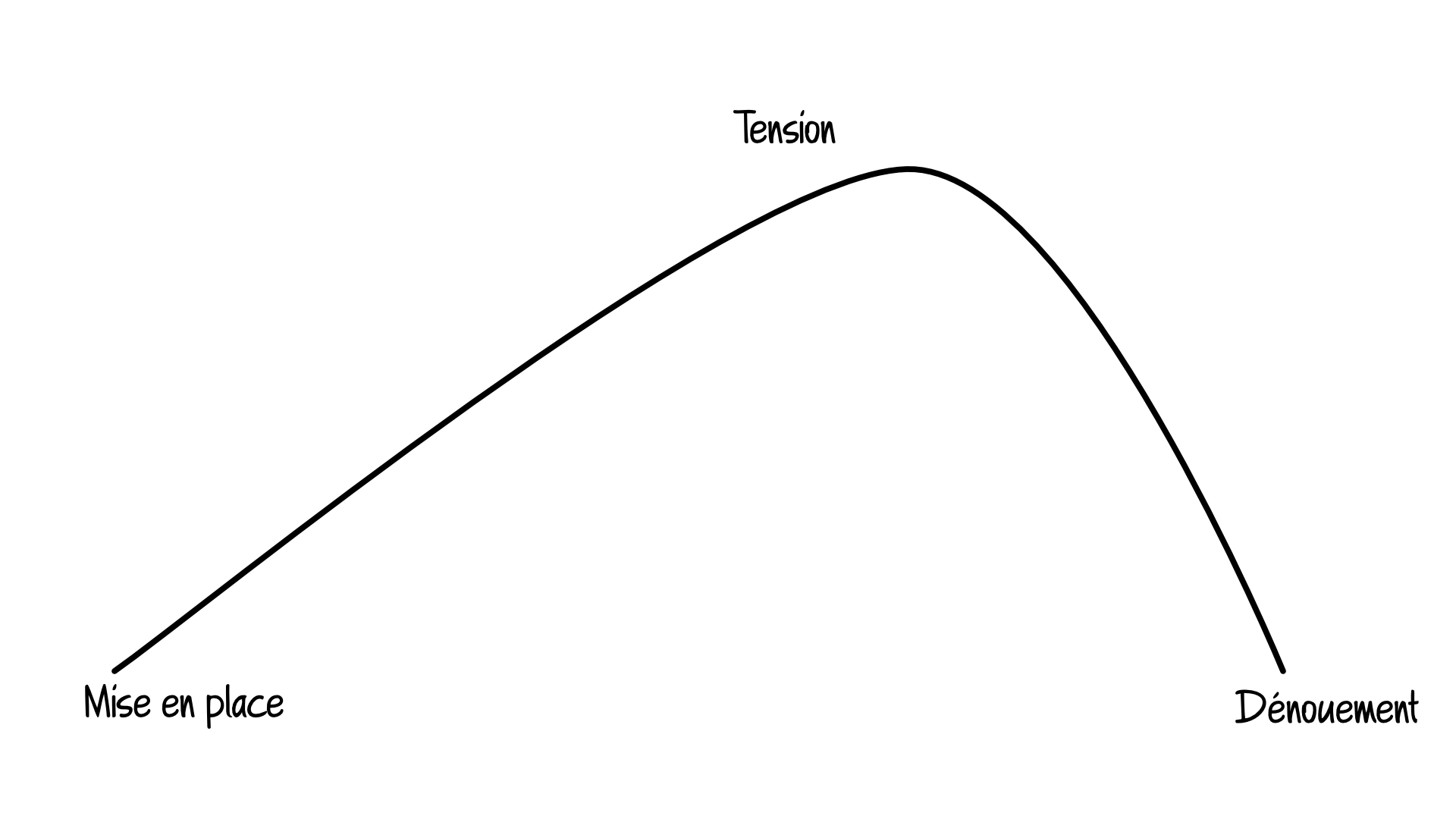
A setup, some tension, and then a resolution (or payoff).
Okay, that's all well and good, it might be enough for a short 30-second video, but here we still have several minutes to fill. And this simplified story structure, over several minutes, will very clearly risk boring the viewer. And on YouTube, if the viewer gets bored, they leave the video.
So we add some variations
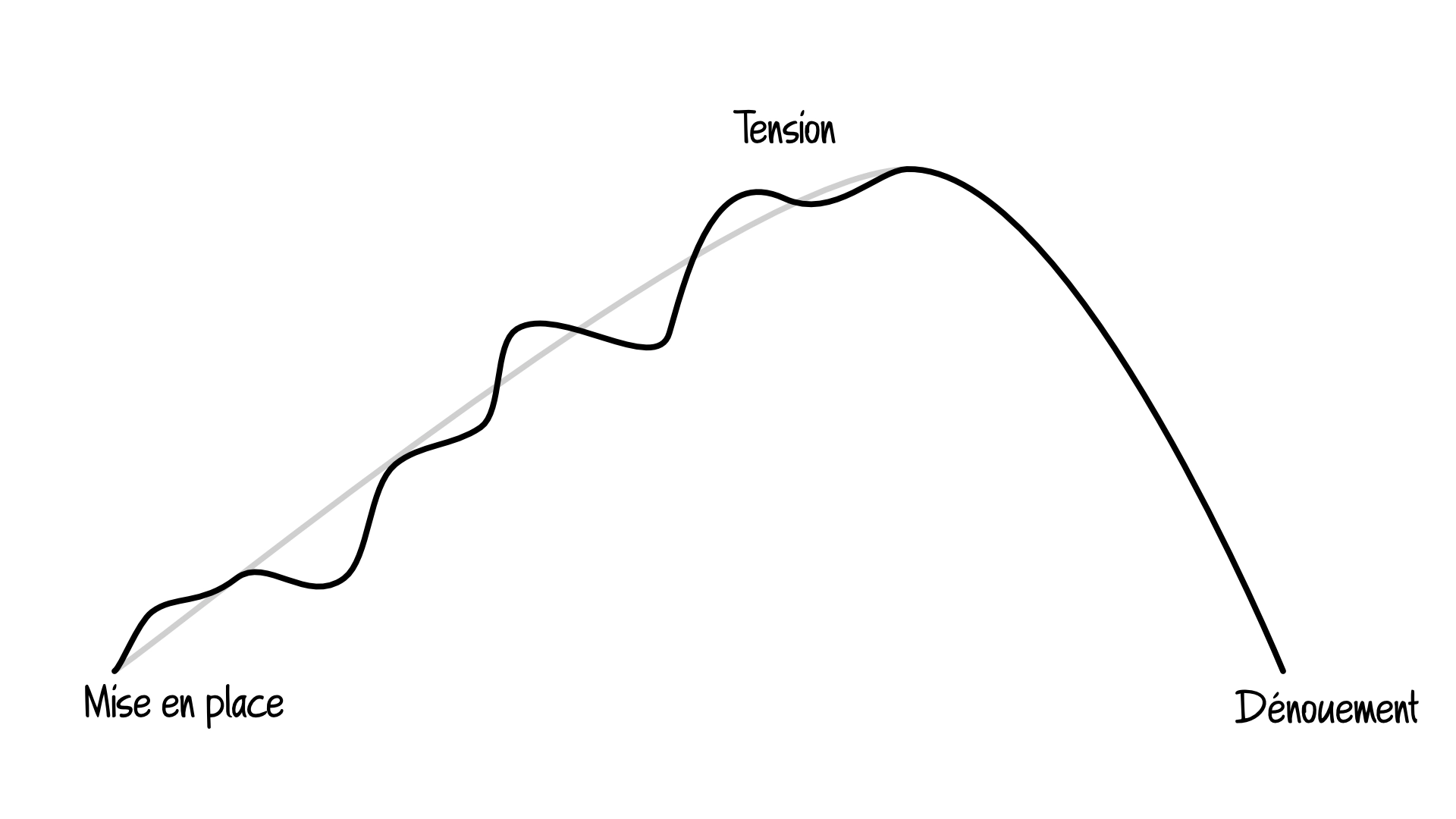
This is where it becomes problematic:
If we "quantify" the emotion in the sequence of events in Jason's documentary, it looks like this:
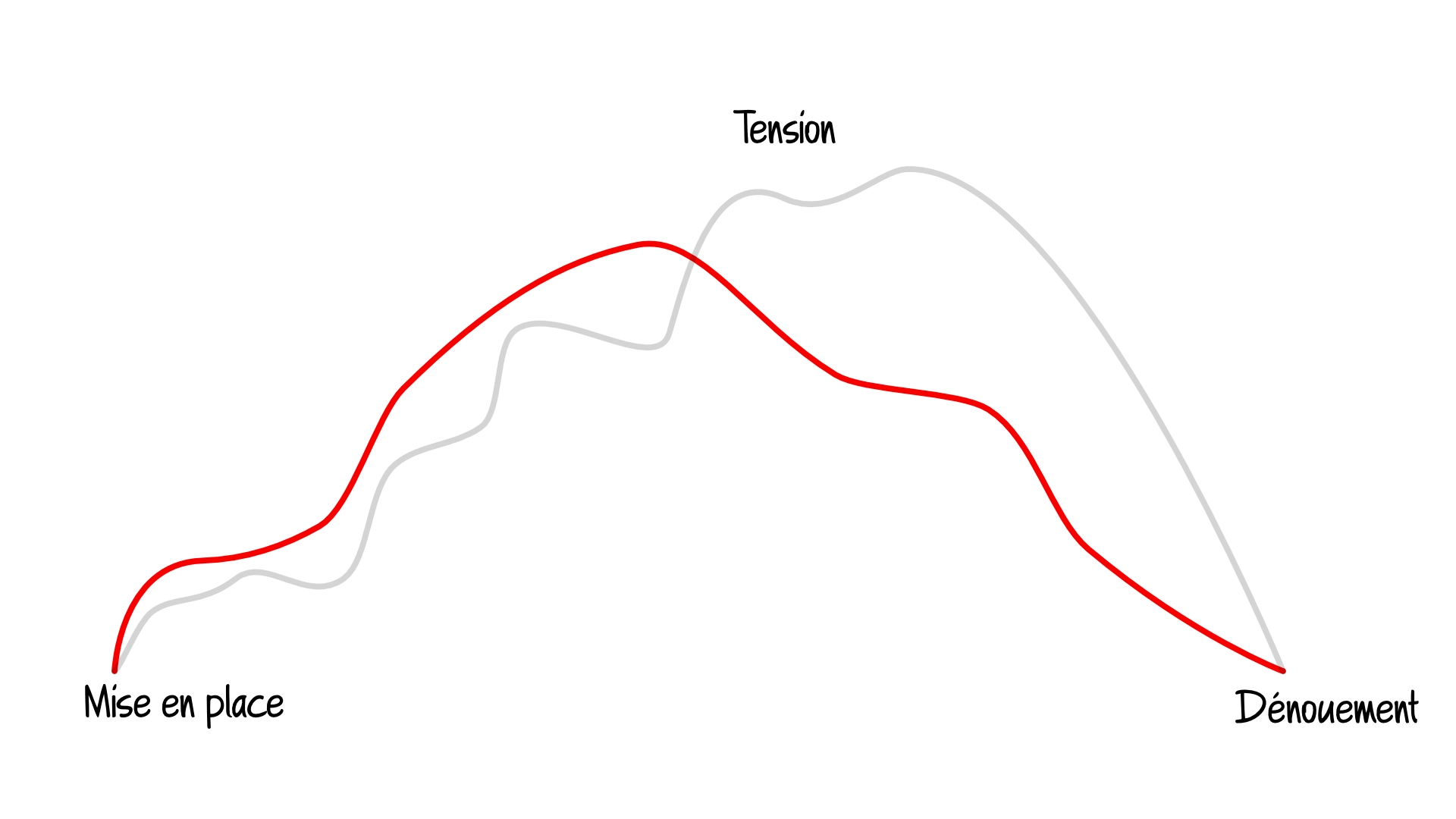
The viewer will experience a lovely sequence full of emotion, then get sent back to a far less interesting sequence because there's little at stake.
So here's the slightly crazy idea I suggested to him: What if we edited the video backwards?
So we take the hard-to-reach school and place it at the end. Since they had to climb mountains (both literally and figuratively) to bring the supplies to that school. The stakes and the tension will follow the right curve and give the video a satisfying resolution.
💡To do this, there was no question of lying and making people believe the events had unfolded the other way around. This is purely my own ethics: I refuse to alter a story to make it pleasant. I just change the way it's told with a small narrative subtlety. I'll let you go watch the video if you're interested (every view helps Jason develop more projects like this one, so it's a double win).
After switching the schools in the documentary, it immediately feels much better suited. Especially for viewing on YouTube.
But, unfortunately, it would have been too easy to end there.
An ending problem
You have to build your ending based on the impact you want. If you just end on a satisfying conclusion, viewers will simply move on to the next video. But we wanted to push them to action. We wanted to encourage viewers to give a bit of money to help Jason with his future missions. So we added a story within the story.
By adding pieces to camera where Jason explains his story, scattered throughout the documentary's events, he becomes much more than a simple "reporter". He becomes the hero of his own story. And every story has its own resolution. Jason's ends at the end of the video, after the school in the mountains, as he heads to a meeting to set up his association to run more missions like this one in the Philippines.
Did we reach our objectives with this documentary on YouTube?
Most creators have an objective quantified in "YouTube views". But, for those who know me, you know what I preach over and over: On YouTube, editing doesn't drive the views. You can have a video edited terribly; if the video's idea and the packaging (marketing in short: thumbnail and title) are good, the video will get thousands of views. So what's the objective you should aim for when you edit a video for YouTube?

Translation: I'm so happy to have discovered this side of YouTube, it's exactly what I want to see. Kindness and love. People who love one another.
The editing of a video, and especially on YouTube, will have an impact on viewers. And in the case of a video that aims to strike an emotional chord. The impact should show through with a majority of comments that speak of emotion.
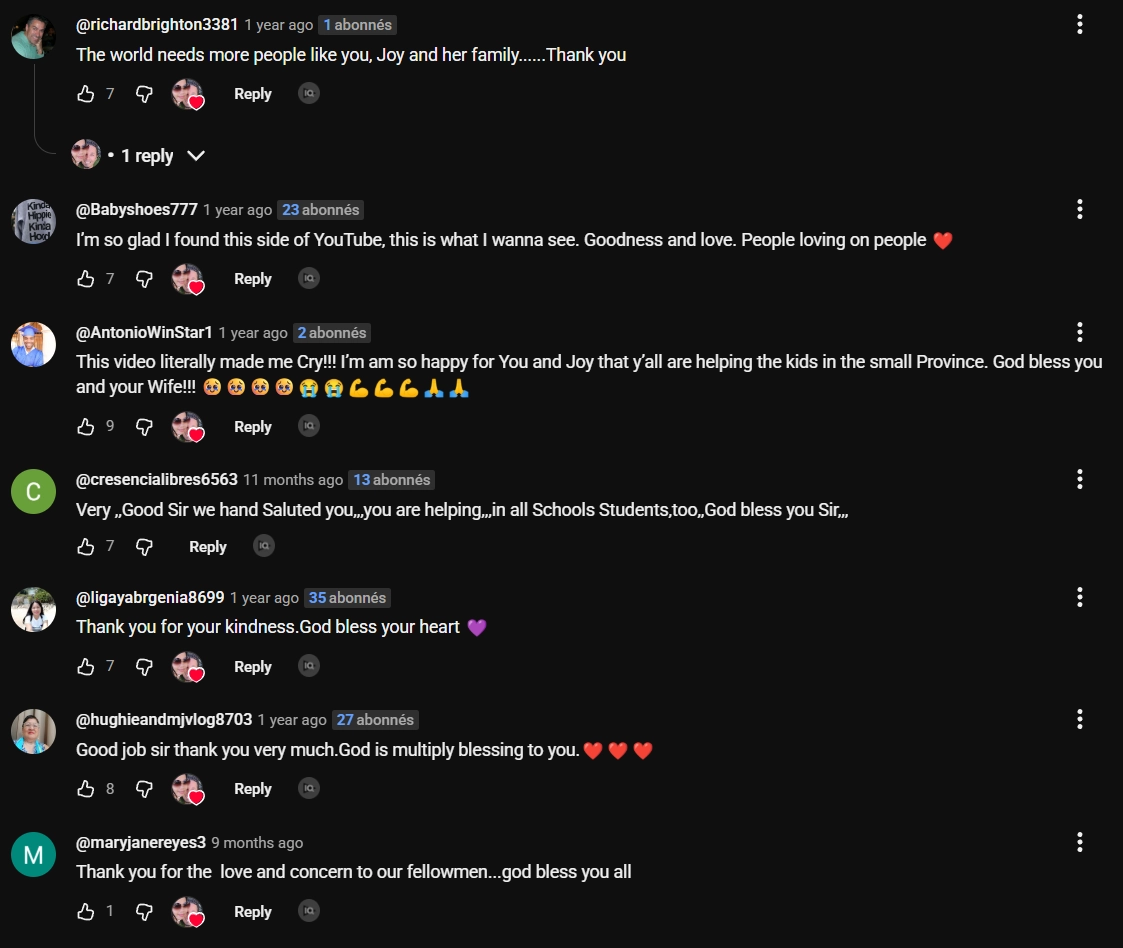
💡Key takeaway: a video that speaks of emotion will be a success when the majority of comments use emotional language. And a video about facts? Factual language.
So it's an objective fully met. And if we add to that the fact that the video got 60,000 views and earned Jason enough money to keep going. I think we can say it was a successful mission for us.