Social media ads: how do you succeed with your campaigns in 8 steps? (without chasing virality)
Published on 08 Jun 2026
Running ads on social media without a plan is a bit like singing in the forest hoping the trees will subscribe to your Deezer. The intention is good, but nobody's listening.
At Norde, our video production agency, we've just launched an ad campaign on social media for one of our tools, PR2XML. Rather than serve you yet another theory, we decided to show you our strategy concretely: the plan, the targeting, the hook, the staging, the production, and above all how to measure the performance of all that.
Spoiler: succeeding with a social media ad is almost never a question of budget. It's a question of method.
Contrary to what you might think, the goal of a social media ad isn't to get the widest possible reach. We're not trying to make a viral skit that racks up millions of views.
We want the opposite: to target exactly the right people through precise targeting, and to make sure they stay on the video.
In our case, PR2XML is software that converts an Adobe Premiere Pro project to all the other editing programs. In other words, it's not aimed at someone looking for a hiking spot or a new car. It's aimed at two types of users:
An ad seen by millions of the wrong people, for us, is a failure. An ad seen by a few thousand video editors fed up with Premiere is a success. Remember this: it's the foundation of the whole strategy.
Key takeaway: An ad is paid for by delivery. If you target millions of people with no further detail, it's going to cost us a lot. On the other hand, if we aim to reach a smaller but better-targeted audience, the cost per click will be higher, but the real acquisition cost will be much lower in the long run.
Before filming anything, we ask ourselves two very simple questions:
The good news is that the first answer almost always gives you the second. As soon as we know precisely what our product does (convert a Premiere Pro file to other editing programs), we know precisely who to talk to: video editors, and no one else.
This discipline keeps you from wasting your budget talking to everyone. On social media, the sharper your target, the more effective your ad campaign. That's true for a small software publisher just as much as for the largest companies.
There are three broad approaches, depending on your goal.
In PR2XML's case, our ad plays mostly on the first two stages: making people discover the tool exists (awareness) and making them want to take a closer look (consideration). We're not screaming “buy now,” we're planting an idea.
And since we're in a very niche market, we can still hope to pick up a few conversions along the way. That's the whole advantage of this kind of market: the audience is small, but it arrives with the problem already in mind. So discovering that the solution exists is often enough to drive action: the first two stages move closer together. Someone struggling with Premiere who stumbles on PR2XML can go from “oh, that exists” to “I'll try it” in a single video.
One question comes up all the time: which platform should you run your ads on? That's the whole point of digital advertising on social media, you choose precisely where and to whom you appear.
There's no universal answer, because each platform attracts a different audience. Meta (Facebook and Instagram) remains a must for the general public and short-form video. TikTok rewards native, spontaneous content. And LinkedIn is often the best option for companies doing B2B who want to reach professionals in a work context. If your ideal client spends their days on LinkedIn, that's where you need to be, even if the cost is higher there.
Format matters as much as the platform. The same idea can be adapted vertically for Reels and stories, square for the feed, or in a wider format elsewhere. Design your ad for the dominant format of the target platform, not the other way around.
Our advice: don't spread your budget across ten platforms at once. Choose the one where your audience actually is, master it, and only then expand.
You have a few seconds, no more, to catch your target's eye before they scroll past. So you need a strong, targeted hook image.
For PR2XML, we put on screen editors' “favorite” software: Adobe Premiere Pro... crashing. The irony is deliberate, obviously, since we're targeting exactly those users at the end of their rope with repeated bugs and crashes. In a few seconds, the right viewer thinks: “OK, we're talking about Premiere, and there's a bug: what's going to happen?”
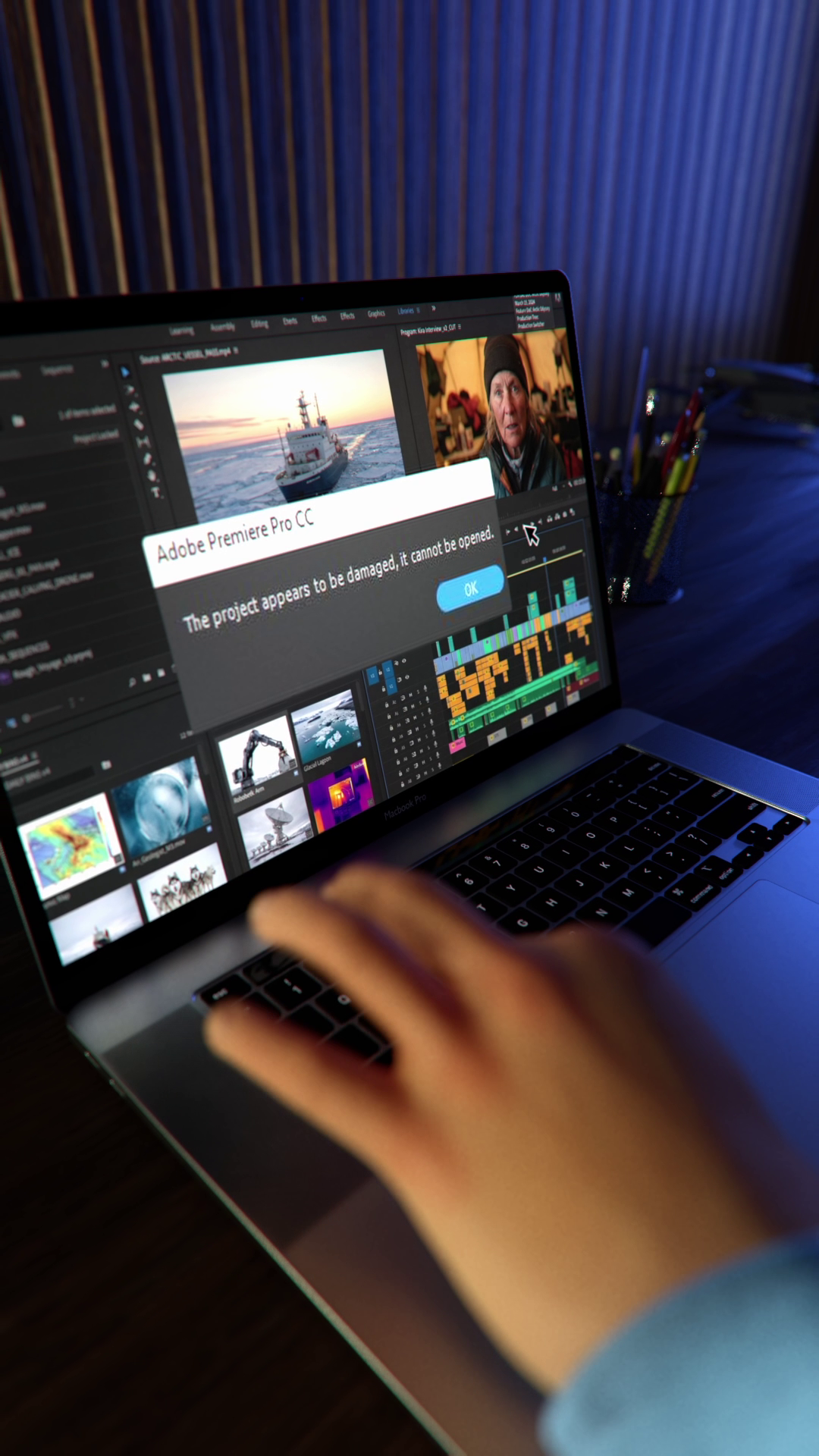
That's exactly the intended effect. The hook does two things at once: it magnetizes the right people, and it scares off the others. And scaring off the wrong people is a good thing.
The classic trap is to show your hook image and then jump straight into an explanatory pitch. Except that at that point, the viewer isn't in the right frame of mind yet. You first have to draw them into a little story, your message will land much better afterwards.
Here's the staging we built:
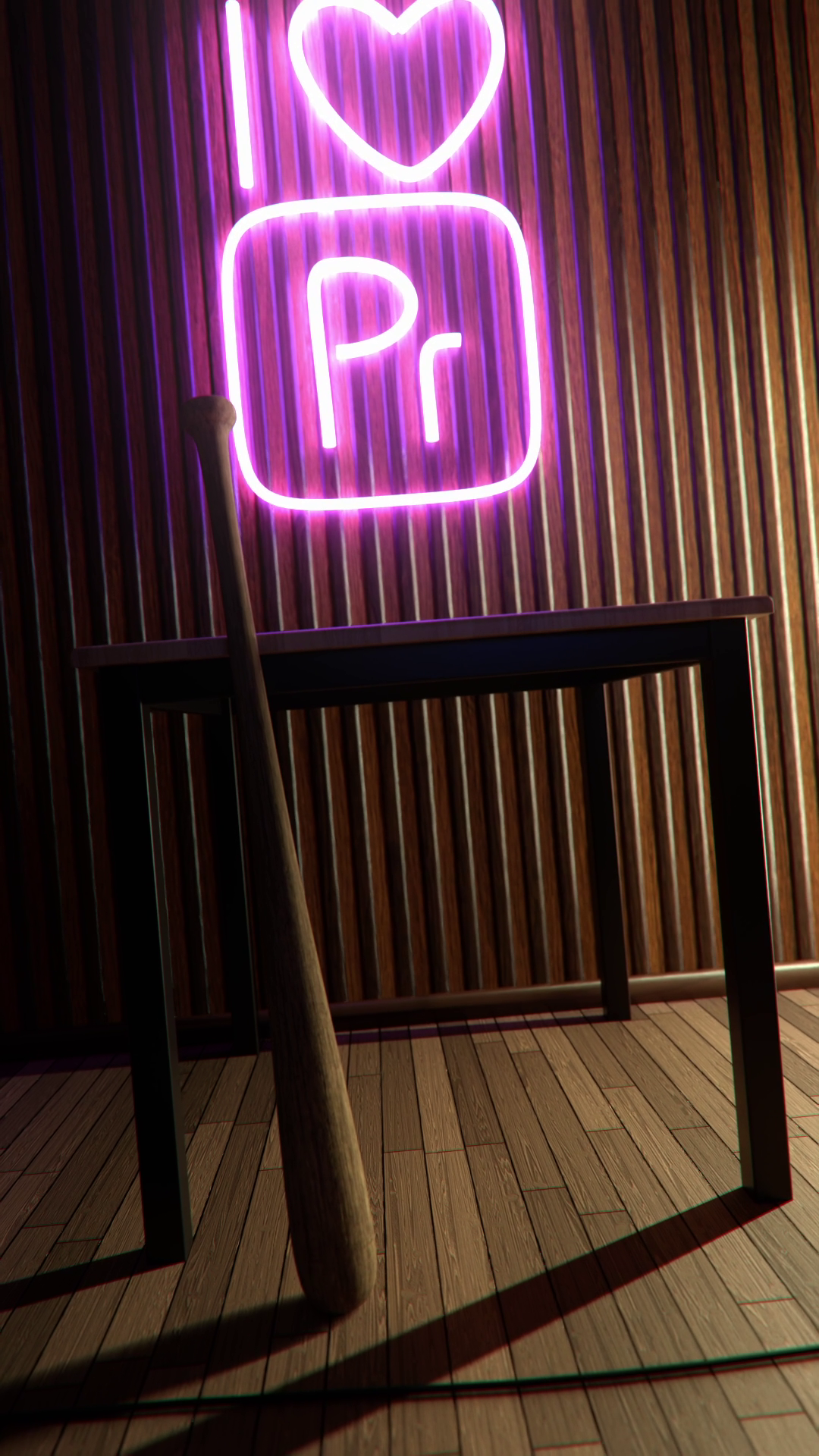
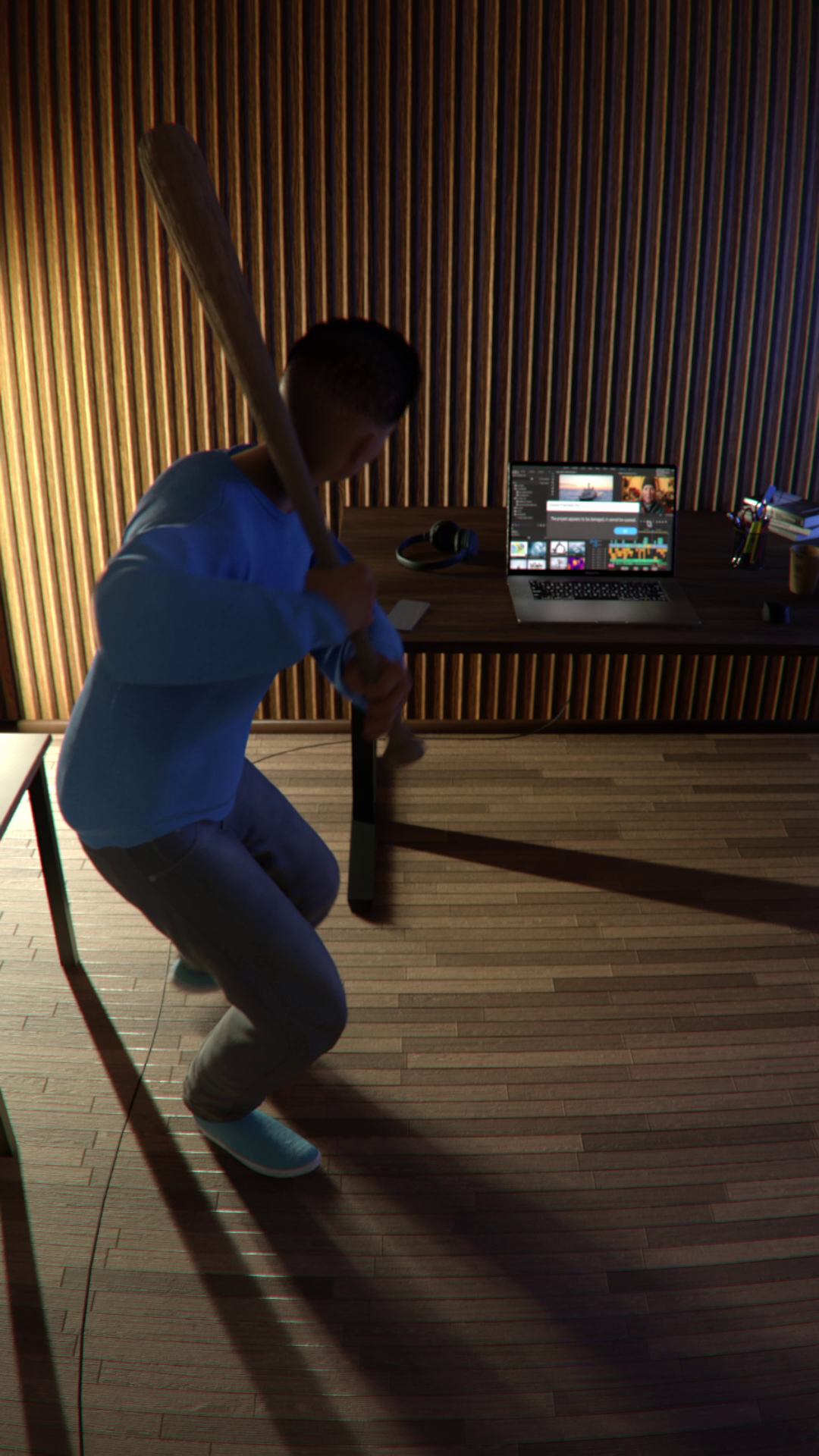
We rely here on a major principle of social media: satisfying content. Watching a PC get destroyed gives real satisfaction. To heighten the effect, we ran the explosion in slow motion (even ultra slow motion), then we follow the PC flying down the street, drone-style camera.

And it's only at that point that we start pitching the product. The viewer is captivated, relaxed, satisfied: they're finally ready to hear the message.
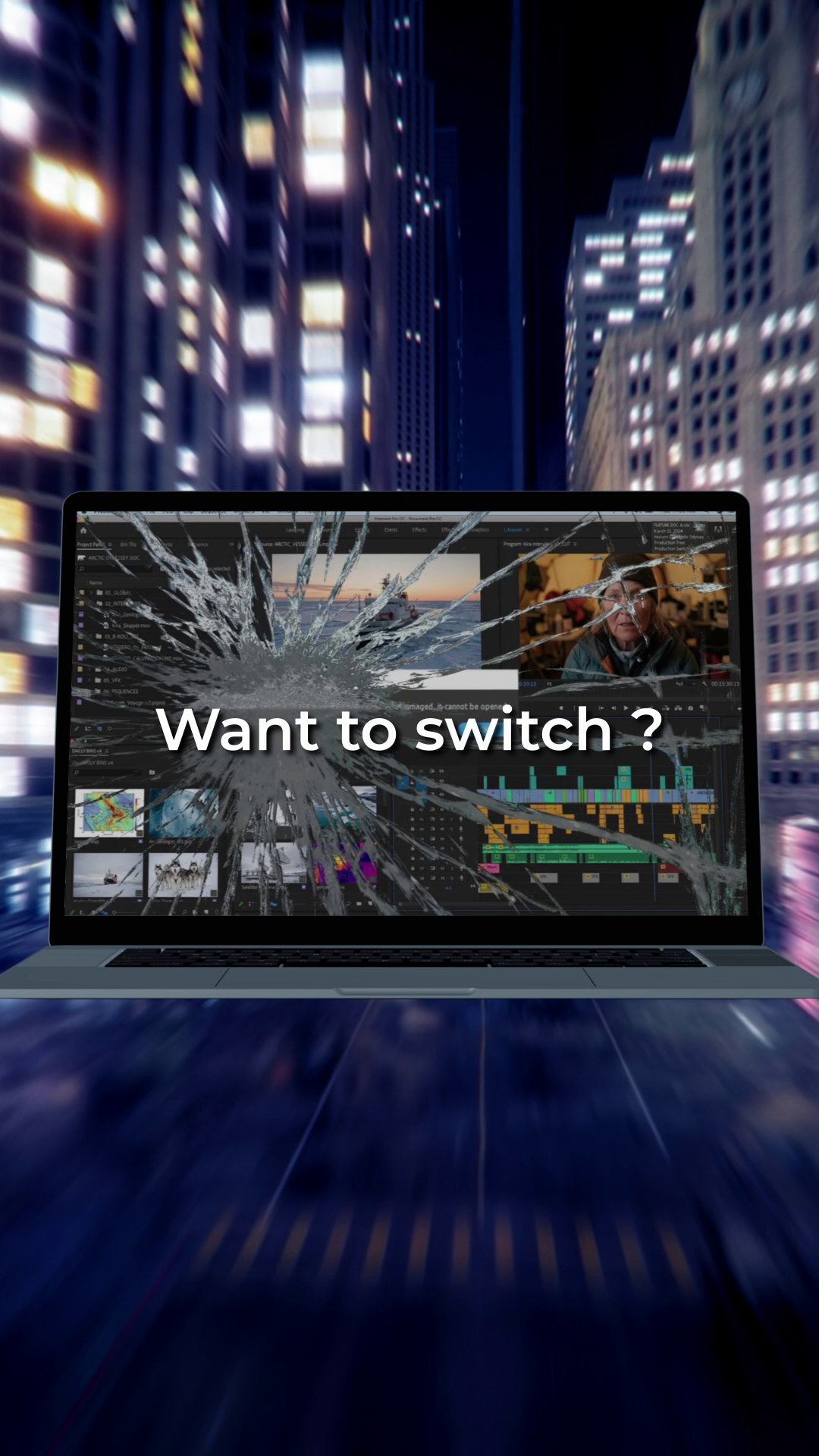
At first, we thought we'd film all this in live action. Then we realized it was far smarter to move the creative work to 3D.
Why? Thanks to flexibility. Since we're going to spin this ad into several versions, 3D lets us change everything in very little time. A new knights movie is a hit? We change the set, add a castle or a dragon in the background, and ride the trend. It's a huge advantage for iterating, provided you have the resources in-house.
The principle to remember, whatever your technique: make your shooting day pay off. If you film a single idea and a better one comes to you two months later, you risk having to reshoot everything. Plan from the start how to create several versions from a single concept.
On the technical side, our recommendations:
Once the actors, the lights and the camera are in place, it costs almost nothing to shoot two or three extra variations. You'll have material for all your future ads.
The question everyone asks. The honest answer: it's still a bit early to be definitive, but the first results are positive.
We've got a good “stop scroll”: interested people stop on the video. And above all, the ad doesn't generate useless views among people who had no reason to watch it.
A few metrics to track in your ad account, beyond the simple number of views:
That was precisely the goal: for the people it doesn't concern to leave, so we keep only potential customers. The last thing we wanted was a video with millions of views. Nobody in the automotive world cares about switching from Premiere Pro to DaVinci Resolve. By owning that choice, we targeted the right people, and that's the real indicator of success.
We insist on the word “first” ad. On social media, you absolutely have to iterate: launch, analyze the performance, and improve. Ad campaigns that work are almost never first attempts, they're versions optimized ten times over.
For example, here are the optimization leads we're already keeping up our sleeve:
There are a thousand possible variations. What matters is having a solid base, then iterating until you find the ad that performs.
At Norde, that's exactly what we do every day for the companies we support: thinking of advertising as a story, not as a billboard. Whether it's to structure your social media strategy, polish your brand image or produce social ads that stand out, our agency is here for that. If you have a product, a service or an offer to promote on the web and you want to talk about it, we're here, no pressure.
There are traditionally four types of advertising, sorted by their goal:
Historically, we talk about the “5 big media”:
There's no “best” network in absolute terms: the best is the one where your audience is. That said, here are the 10 most used and most relevant social media platforms for advertising:
It's most often called “social ads” or “social media advertising” (sometimes abbreviated to SMA). In French, people also say “publicité sociale” or “publicité social media.” Concretely, it refers to any paid ad delivered on a platform like Meta, TikTok or LinkedIn - not to be confused with organic (unpaid) posts.
There's no fixed price: the cost depends on your target, your sector and the competition on the platform. You generally pay by cost per click (CPC) or cost per thousand impressions (CPM). But the real question isn't “how much does it cost,” it's “how much does a customer cost”: a well-targeted campaign can show a more expensive click while costing less per acquired customer. You can start with a small budget, as long as you iterate.
Beyond the number of views, look in your ad account: the stop rate (stop scroll), the cost per click, the traffic sent to your site, the conversion rate and the acquisition cost. For a niche market like ours, a good signal is also the absence of useless views: the ad reaches only the right people, not everyone.
No. As we explain in this article, success depends far more on method than on budget: a clear plan, sharp targeting, a good hook and iteration. A smart little campaign almost always beats a big, poorly thought-out budget.
How to Choose the Right Audiovisual Communication Agency for Your Video Project

10 Best Practices to Optimize a Video Ad for Social Media
How to make a video ad that converts?